Introduction
Black and white photography has remained one of the most powerful forms of visual expression throughout the history of photography. By removing color, the viewer's attention is naturally directed toward emotion, texture, composition, light, and storytelling. Among the many artistic photography styles, the cinematic black and white triptych portrait stands out as a timeless and sophisticated approach to portraiture.
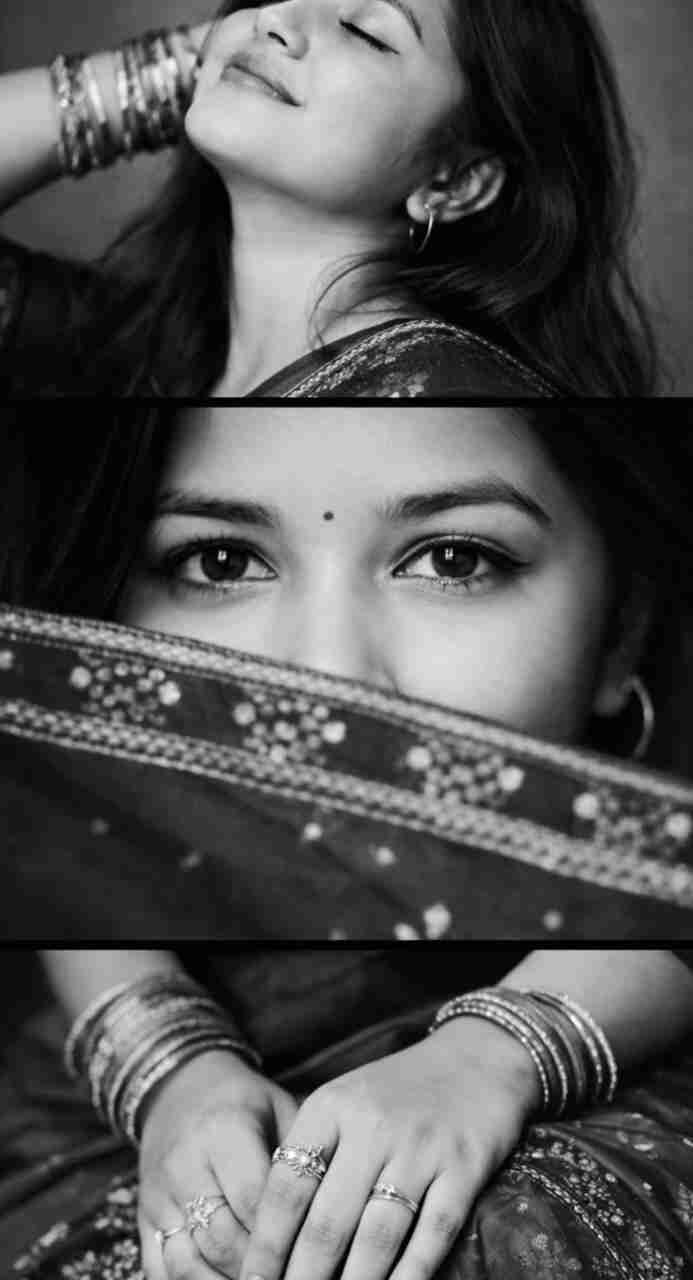
A triptych of a young 20 year old indian woman in daree black and white photography. Head tilted back, eyes closed with bangles on her arm. The second middle panel is a closeup of her eyes looking derectly at the camera, partially obscured by a patterned fabric. The third down panel focuses on her hands resting on her lap, showing rings and bangles, with a pattern fabric on her leg. Face should be 100% accurate as image
A triptych portrait consists of three separate images arranged vertically or horizontally to tell a complete visual story. Rather than relying on a single frame, the triptych format allows photographers and digital artists to present multiple perspectives of the same subject. Each panel contributes to the overall narrative, creating a deeper emotional connection between the viewer and the subject.
In a cinematic black and white triptych portrait, every frame serves a distinct purpose. One panel may showcase the subject's graceful pose, another may focus on expressive eyes, while the final frame highlights meaningful details such as jewelry, hands, or fabric textures. Combined together, these images create a powerful editorial-style composition that feels both artistic and emotionally engaging.
With the rise of artificial intelligence image generation, creators can now produce stunning black and white triptych portraits using detailed prompts and reference photographs. AI tools make it possible to preserve facial identity while enhancing mood, lighting, and composition with professional-quality results.
Whether you're creating content for photography portfolios, social media, digital art collections, or personal projects, a cinematic black and white triptych portrait offers a refined and timeless aesthetic.
How To Use Photo Editing?
Photo editing is an essential part of creating a cinematic black and white portrait. Modern editing techniques allow artists to control every aspect of the image, from lighting and contrast to texture and composition.
The process usually begins with a high-quality reference photograph. AI-powered tools can analyze the subject's facial features and preserve their identity while applying artistic enhancements. Once the image is generated, editing helps refine details and create a cohesive visual style across all three panels.
Photo editing can be used to:
- Convert images into monochrome
- Enhance facial details
- Increase contrast
- Add cinematic shadows
- Improve texture visibility
- Refine skin tones
- Create dramatic lighting effects
- Enhance fabric patterns
- Emphasize jewelry details
- Maintain consistency across multiple frames
Unlike traditional color photography, black and white portraits depend heavily on tonal range. The balance between highlights and shadows determines the emotional impact of the image. Careful editing ensures that every detail contributes to the overall storytelling experience.
The goal is to create a portrait that feels natural, elegant, and emotionally rich while maintaining a fine-art editorial appearance.
Tools You Can Use For Prompt Copy and Create Photo
Several powerful tools can help you create ultra-realistic black and white triptych portraits from detailed prompts.
1. ChatGPT
ChatGPT is an excellent tool for generating professional image prompts. Users can describe poses, compositions, lighting conditions, clothing, and artistic styles, and ChatGPT can transform these ideas into detailed prompts optimized for AI image generators.
2. Midjourney
Midjourney is widely known for its artistic capabilities and cinematic image generation. It excels at creating fine-art portraits and editorial photography styles.
3. Flux AI
Flux AI is highly regarded for producing realistic facial details, natural skin textures, and professional-quality portrait photography.
4. Leonardo AI
Leonardo AI offers excellent facial consistency and image realism, making it a strong choice for portrait-focused projects.
5. Adobe Photoshop
Photoshop remains the industry standard for image editing. It allows users to adjust contrast, refine black-and-white tones, enhance textures, and create professional collage layouts.
6. Canva
Canva is useful for arranging triptych panels and preparing final images for social media, websites, and portfolios.
7. Ideogram
Ideogram helps generate visually compelling compositions with strong storytelling and realistic image quality.
8. Google Gemini
Gemini can assist with prompt writing, creative direction, and concept development for portrait photography projects.
Combining multiple tools often produces the best results. Many creators use ChatGPT for prompt generation, Flux AI or Midjourney for image creation, and Photoshop for final refinements.
How To Edit Photo?
Creating a cinematic black and white triptych portrait involves several important steps.
Step 1: Choose a High-Quality Reference Image
Select a clear image with visible facial features and good lighting. A high-resolution reference photo helps maintain accurate facial identity throughout the editing process.
Step 2: Create a Detailed Prompt
An effective prompt should include:
- Subject description
- Facial preservation instructions
- Pose details
- Clothing information
- Jewelry specifications
- Lighting requirements
- Black and white style preferences
- Composition instructions
- Triptych layout details
Detailed prompts lead to more accurate and visually appealing results.
Step 3: Generate Individual Panels
A successful triptych portrait usually consists of three complementary images:
- Panel One
A graceful portrait showing the subject's pose and expression. - Panel Two
A close-up emphasizing the eyes and emotional connection with the viewer. - Panel Three
A detail-focused composition highlighting hands, rings, bangles, or fabric textures.
Each panel should contribute to the overall narrative.
Step 4: Maintain Facial Consistency
Review each generated image carefully. Ensure that facial structure, eye shape, hairstyle, skin texture, and identity remain consistent across all panels.
Step 5: Convert to Black and White
Apply a monochrome conversion that preserves tonal depth and texture. Avoid flat grayscale images that lack contrast and visual impact.
Step 6: Enhance Contrast
Increase contrast to create stronger separation between highlights and shadows. This step is essential for achieving a cinematic look.
Step 7: Refine Textures
Enhance details such as:
- Fabric patterns
- Jewelry reflections
- Hair strands
- Skin texture
- Hand details
These elements add realism and visual richness.
Step 8: Add Cinematic Grain
Subtle film grain contributes to the timeless aesthetic of black and white photography. Use grain sparingly to avoid reducing image quality.
Step 9: Arrange the Triptych Layout
Place the three images in a balanced composition. Ensure that spacing, alignment, and visual flow guide the viewer naturally through the portrait story.
Step 10: Export in High Resolution
Save the final artwork in 4K or 8K resolution to preserve every detail and maintain professional presentation quality.
Conclusion
A cinematic black and white triptych portrait is much more than a collection of images. It is a visual narrative that combines emotion, texture, composition, and artistic storytelling into a single cohesive artwork. By focusing on multiple perspectives of the same subject, triptych portraits create depth and engagement that traditional single-frame portraits often cannot achieve.
Modern AI tools have made it easier than ever to create professional-quality black and white portraits while preserving facial identity and enhancing artistic expression. Through careful prompt writing, thoughtful composition, and refined editing techniques, creators can produce stunning fine-art portraits that feel timeless and sophisticated.
Whether you are building a photography portfolio, creating social media content, designing editorial artwork, or exploring creative storytelling, the cinematic black and white triptych portrait remains one of the most elegant and powerful visual styles available today. Its combination of simplicity, emotion, and artistic depth ensures that it will continue to inspire photographers and artists for years to come.