Introduction
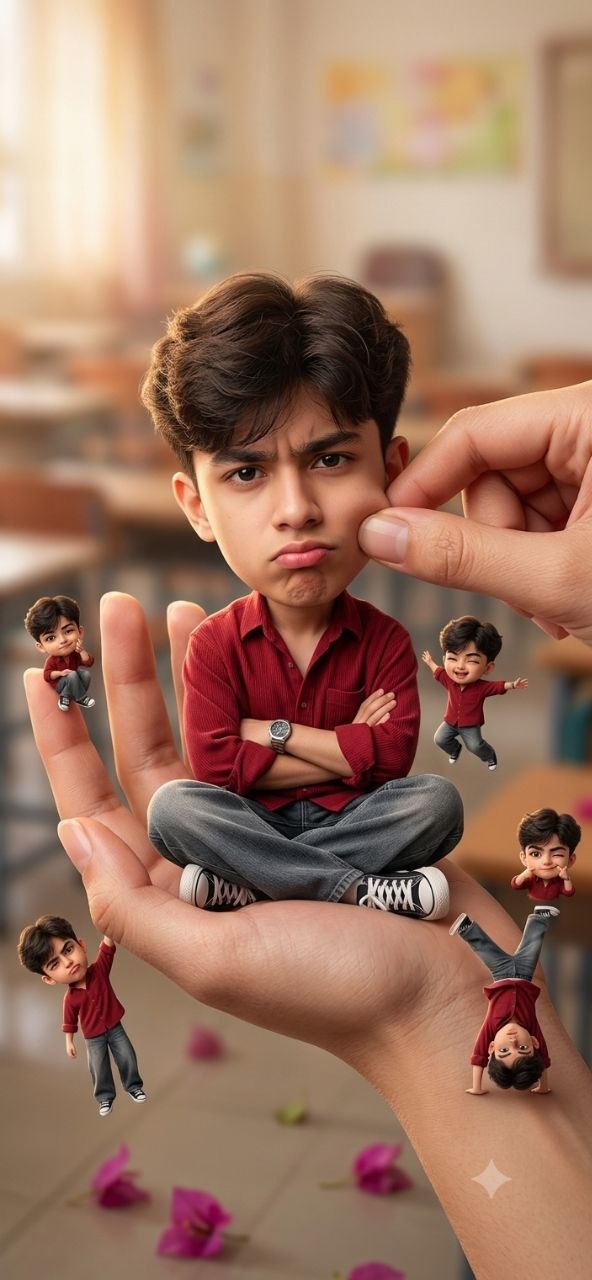
AI photo editing has become one of the most exciting creative trends in digital art and social media design. Among the most viral editing styles today is the “Chibi Classroom Companion Portrait” aesthetic. This creative concept transforms a real person into a miniature big-head cartoon character while maintaining realistic facial details, outfit accuracy, and cinematic photography quality.
"Chibi Classroom Companion Portrait Prompt"
Create a stylized big-head miniatureportrait of her. She appears as a tiny character with a slightly enlarged head and small body, sitting inside a large women hand. Pose: seated cross-legged, hands crossed, slightly pouty, angry but very cute expression. looking at the camera.Environment:blurred school classroom background with bokeh. Add a second hand gently pinching/adjusting the person's cheek for a playful effect. Also add some 3d mini chibi characters of her around, doing funnystuffs. Outfit: same as her 32reference image. Lighting: soft cinematic light, shallow depth of fieldr high detail, ultra-realistic, clean focus.
The word “chibi” comes from Japanese art culture and refers to tiny, adorable characters with oversized heads and miniature bodies. Chibi portraits are known for their cute expressions, playful emotions, and toy-like appearance. When combined with realistic photography and cinematic lighting, the result becomes both artistic and visually stunning.
In this editing style, the subject appears as a tiny miniature character sitting inside a giant human hand. The character usually has:
A large expressive head
Small realistic body proportions
Cute emotional expressions
Cartoon-inspired aesthetics
Soft cinematic lighting
The “Classroom Companion” version adds a blurred school classroom background with warm bokeh lighting to create a dreamy atmosphere. Additional playful details such as cheek-pinching hands and mini 3D chibi duplicates make the composition feel alive and entertaining.
This editing style is popular because it combines:
Realism
Fantasy
Emotional storytelling
Cute aesthetics
Cinematic portrait photography
It is perfect for:
Instagram posts
Pinterest art pages
Anime-inspired edits
AI profile portraits
YouTube thumbnails
Viral social media content
With modern AI image generation tools, anyone can create professional-quality chibi portraits using detailed prompts and simple editing techniques.
How To Use Photo Editing?
Photo editing allows creators to transform ordinary pictures into artistic visual compositions. In AI-generated editing, prompts play a major role because they guide the AI about lighting, style, character design, camera focus, emotions, and environment details.
To create a “Chibi Classroom Companion Portrait,” you need:
A clear reference image
A detailed AI prompt
Editing software or AI tools
The reference image is important because it helps maintain:
Facial identity
Hairstyle accuracy
Outfit details
Skin tone consistency
Realistic resemblance
A successful chibi portrait keeps the original identity recognizable while transforming the body proportions into a cute miniature style.
When writing prompts, detail is extremely important. A high-quality prompt should describe:
Character pose
Head size
Facial expression
Outfit details
Lighting mood
Background style
Camera focus
Additional playful elements
For example:
“Big-head miniature portrait”
“Tiny seated cross-legged character”
“Cute angry pout expression”
“Blurred classroom background”
“Soft cinematic lighting”
“Shallow depth of field”
These details help AI tools generate cleaner and more realistic results.
Another important part of editing is maintaining composition balance. The tiny chibi character should remain the main focus while secondary elements such as extra mini chibis, background blur, and hand interaction support the overall storytelling.
The oversized hand holding the tiny character also creates a fantasy scale effect that makes the image visually unique and emotionally engaging.
Tools You Can Use For Prompt Copy And Create Photo
There are many AI image generation and editing platforms available for creating chibi portraits and cinematic cartoon compositions.
1. Canva
Canva is beginner-friendly and excellent for creating social media graphics and aesthetic edits.
Features:
Easy drag-and-drop editing
Background blur effects
Text overlays
Portrait layouts
Mobile-friendly editing
It is ideal for beginners creating Instagram-ready designs.
2. Adobe Photoshop
Photoshop is one of the most powerful professional editing tools available.
Features:
Advanced retouching
Layer masking
Cinematic color grading
Background manipulation
Character compositing
Photoshop is perfect for detailed chibi editing and realistic blending.
3. PicsArt
PicsArt is a popular mobile editing app with AI-powered creative tools.
Features:
Cartoon effects
AI avatar creation
Blur effects
Artistic filters
Sticker overlays
It is especially useful for smartphone creators.
4. Leonardo AI
Leonardo AI specializes in high-quality AI-generated artwork and cinematic portraits.
Features:
Chibi character generation
Realistic facial rendering
Stylized cartoon effects
Ultra-detailed outputs
Cinematic lighting
This platform is excellent for fantasy portrait creation.
5. Midjourney
Midjourney is widely used for artistic AI-generated visuals and anime-inspired designs.
Features:
Premium cinematic rendering
Fantasy portrait styles
Soft anime aesthetics
Artistic cartoon shading
High-resolution outputs
It creates highly polished creative artwork.
6. ChatGPT Image Generator
AI image generation inside ChatGPT allows users to create stylized portraits directly from prompts and uploaded reference images.
Features:
Chibi portrait creation
Face reference support
Cinematic scene generation
Miniature fantasy compositions
Fast rendering process
This tool works especially well for personalized cartoon edits.
How To Edit Photo?
Creating a “Chibi Classroom Companion Portrait” becomes easy when you follow the correct workflow.
Step 1: Choose a Clear Reference Image
Select a high-quality portrait photo with:
Visible face details
Good lighting
Clear hairstyle
Full outfit visibility
Sharp reference images improve AI accuracy significantly.
Step 2: Write a Detailed Prompt
A detailed prompt improves realism and style consistency.
Your prompt should include:
Big-head miniature proportions
Sitting pose
Facial emotion
Outfit matching
Classroom background
Hand interaction
Additional mini chibi companions
Lighting style
Example ideas:
“Cute angry pout expression”
“Cross-legged pose”
“Hand pinching cheek playfully”
“3D mini chibi companions”
“Soft cinematic classroom bokeh”
These details help AI understand the creative direction.
Step 3: Generate the Chibi Character
Use your preferred AI tool to generate the portrait.
Important tips:
Keep the face recognizable
Avoid excessive cartoon distortion
Maintain realistic eye placement
Preserve outfit accuracy
The final result should feel like a stylized version of the real person.
Step 4: Add Cinematic Lighting
Lighting is one of the most important parts of creating premium AI artwork.
Recommended effects:
Warm classroom glow
Soft rim lighting
Natural highlights
Gentle facial shadows
Soft cinematic blur
This creates emotional depth and realism.
Step 5: Add Extra Chibi Elements
Small companion characters make the image more dynamic and playful.
Examples:
Tiny dancing chibis
Funny sleeping mini characters
Tiny running companions
Cute emotional reactions
These details improve storytelling and visual engagement.
Step 6: Create Realistic Hand Placement
The oversized hand holding the miniature character should feel natural.
Focus on:
Proper finger positioning
Natural skin texture
Accurate shadows
Correct character scale
This enhances the illusion that the tiny character is physically present.
Step 7: Apply Final Color Grading
Use soft cinematic tones to unify the entire image.
Recommended effects:
Warm pastel highlights
Slight glow
Balanced contrast
Soft shadows
Gentle depth-of-field blur
Avoid oversaturation to keep the artwork premium and realistic.
Step 8: Export in High Resolution
Export your image in:
PNG for maximum quality
JPG for social media sharing
9:16 ratio for Instagram and Reels
High-resolution exports preserve the fine facial details and cartoon textures.
Conclusion
The “Chibi Classroom Companion Portrait” style is a perfect combination of realism, fantasy, and playful storytelling. By transforming a real person into a tiny big-head cartoon character while preserving facial identity and outfit accuracy, creators can produce unique digital artwork that feels cinematic and emotionally engaging.
This editing trend stands out because it mixes realistic photography with adorable anime-inspired aesthetics. The oversized hand interaction, classroom environment, cinematic blur, and mini companion characters make the portrait feel alive and imaginative.
Thanks to AI image generation tools and modern editing software, creating these cute fantasy portraits is now easier than ever. With detailed prompts, proper lighting, and thoughtful composition, even beginners can create professional-looking chibi artwork for social media and personal creative projects.
Experiment with different poses, emotions, classroom settings, and mini character actions to develop your own signature chibi portrait style and create eye-catching artwork that stands out online.