Introduction
A cinematic portrait of a Toyota Fortuner can turn an ordinary photograph into a powerful, premium-looking visual. With the right composition, lighting, color grading, and background treatment, you can create an image that feels like a professional automobile advertisement or a movie poster.
The key is to maintain the original identity and realistic details of the Fortuner while adding cinematic atmosphere. A strong editing prompt should describe the vehicle, camera perspective, lighting, environment, depth of field, reflections, colors, and overall mood.
"Cinematic Fortuner Portrait Prompt"
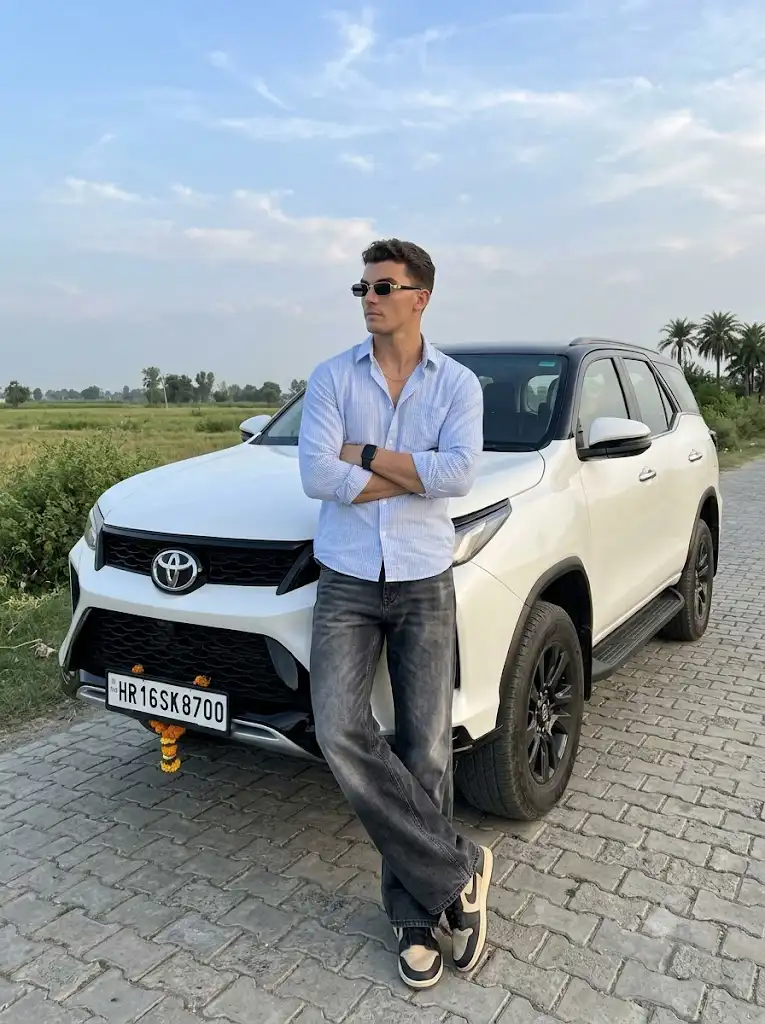
Photorealistic vertical full body portrait of a stylish young Indian man mid-20s with voluminous wavy black hair, trimmed beard and mustache, wearing a light blue striped button-up shirt with sleeves rolled up, dark grey faded wide-leg bootcut jeans, black and beige sneakers, black smartwatch and thin gold chain, arms crossed leaning against the front fender of a white Toyota Fortuner Legender SUV with black roof, aggressive front grille, LED headlights, black alloy wheels and Indian license plate HR 16 SK 8700with a small marigold garland, parked on a grey cobblestone paved road, 3/4 front angle view of the car, background of open green fields, bushes, distant palm tree, partly cloudy bright blue sky, natural bright daylight with soft shadows, golden hour sunlight, eye-level DSLR shot, shallow depth of field, Instagram influencer aesthetic, confident attitude, looking to the side, ultra detailed, sharp focus, 4k, photorealistic, highly detailed skin texture, zoom in 3:4, and The camera is far away from the car and the man is clicking the picture from a distance, this picture is clear don't blur, 100% my face same, and man wearing small rectangular gold-rimmed black sunglasses, don't change my face.
How To Use Photo Editing?
Using the Cinematic Fortuner Portrait Prompt is straightforward when the process is divided into several stages. The most important step is choosing a suitable reference photograph.
Step 1: Select a Good Reference Photo
Choose a high-resolution photograph where the face is clearly visible. A natural photograph with good lighting provides better information for facial identity preservation. Avoid images with excessive filters, strong shadows, heavy blur, or objects covering the face.
Step 2: Upload the Reference Image
Upload the photograph to an AI photo-editing or image-generation platform that supports reference images.
Add an instruction such as:
“Use the uploaded photograph strictly for facial identity. Preserve the recognizable facial structure, hairstyle, skin tone, beard, mustache, and natural proportions while changing only the requested environment, clothing, pose, and photographic style.”
This helps separate the identity-preservation requirement from the creative transformation.
Step 3: Add the Full Prompt
Paste the complete Cinematic Fortuner Portrait Prompt into the prompt field. Include the details about the SUV, clothing, pose, countryside, lighting, camera distance, and composition.
Step 4: Generate Multiple Variations
Create several variations and compare them carefully. Look for the version with the strongest facial consistency, realistic vehicle proportions, accurate clothing, natural hands, and balanced composition.
Tools You Can Use For Prompt Copy and Create Photo
Several categories of tools can help create this automotive portrait.
1. AI Image Generators
AI image-generation platforms can create complete automotive lifestyle scenes from detailed text prompts. They can generate vehicles, landscapes, clothing, lighting, poses, and cinematic compositions. For reference-based portraits, choose a platform that supports image references or character consistency.
2. AI Photo Editors
AI photo editors are useful when you already have an existing photograph. They can help transform the background, modify clothing, place the subject beside a vehicle, adjust lighting, and create realistic environmental details.
3. Graphic Design Applications
Graphic-design software can be used for final composition adjustments. You can crop the image, adjust contrast, add typography, prepare social-media versions, or create an automotive poster.
4. Image Enhancement Tools
Image-enhancement tools can improve resolution and fine details after generation. They can help refine hair, skin texture, vehicle surfaces, clothing, and environmental details. Use enhancement carefully because excessive sharpening can make skin look artificial.
How To Edit Photo?
Once you have your base image, whether AI-generated or a personal photograph, these steps will help you refine it into a truly cinematic portrait.
1. Crop for impact
Position the Fortuner using the rule of thirds, allowing space around it for atmosphere like fog, sky, or road to enhance the sense of scale.
2. Adjust exposure selectively
Slightly darken the background while keeping the vehicle's body clearly lit, creating natural separation between subject and environment.
3. Enhance reflections and highlights
Brighten the windshield, chrome trim, and headlights subtly to emphasize the premium, glossy finish of the SUV.
4. Add atmospheric depth
Introduce light fog, haze, or dust particles in the background to create a sense of distance and cinematic realism.
5. Sharpen key details
Focus sharpening on the grille, headlights, and badge, keeping the background slightly softer to draw attention to the vehicle.
6. Apply color grading
Use cooler tones in the shadows and background, paired with warmer highlights on the vehicle, to achieve that classic cinematic contrast.
7. Export in high resolution
Since this style is often used for wallpapers, social media posts, or portfolio pieces, always export at the highest quality setting available.
Conclusion
The cinematic Fortuner portrait prompt trend showcases how far photo editing has come in transforming ordinary vehicle photos into striking, professional-grade visuals. By focusing on strong angles, controlled lighting, atmospheric backgrounds, and thoughtful color grading, anyone can turn a simple Fortuner photo into an image worthy of a car brand's ad campaign. Whether you choose AI tools like Midjourney and Leonardo AI or prefer manual editing in Photoshop and Lightroom, the underlying principles remain the same — light, mood, and composition working together to tell a compelling visual story. As editing technology continues to advance, this style will only become easier to achieve, making cinematic vehicle photography accessible to enthusiasts everywhere.