Introduction
The Retro Fashion Cinematic Portrait Prompt is a nostalgic AI photo-editing concept designed to transform an ordinary portrait into a vibrant vintage arcade fashion scene. The visual style combines retro gaming culture, pastel streetwear, colorful neon lighting, analog film photography, and authentic candid expressions to create an energetic editorial photograph.
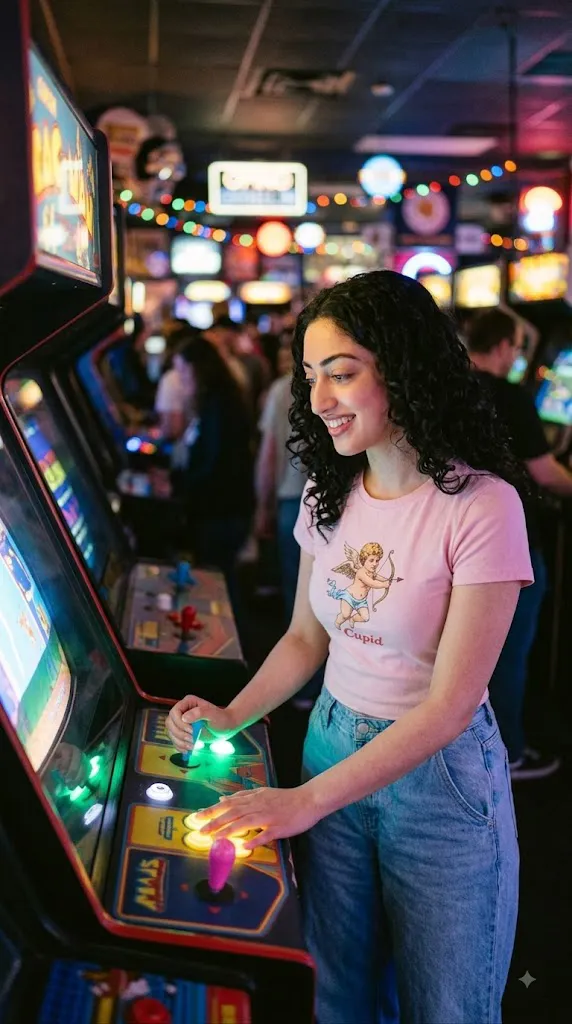
The central concept features a stylish young woman inside a busy vintage arcade game center. She is captured in a half-body composition while playing a classic retro arcade machine. One hand grips the glowing joystick while the other presses the brightly illuminated game buttons. Her attention remains focused on the arcade screen, creating a natural and spontaneous moment rather than a heavily posed fashion photograph.
Her outfit is an important part of the aesthetic. She wears a soft pink pastel T-shirt featuring a vintage Cupid graphic, styled slightly loose for a relaxed appearance. The shirt is paired with short, oversized light-blue denim jeans, creating a youthful combination inspired by retro street fashion.
The arcade environment should feel lively and nostalgic. Multiple vintage arcade cabinets, glowing CRT screens, colorful signage, and blurred visitors should fill the background. Instead of rendering every object sharply, a strong hard-bokeh effect can transform the background into colorful circular light patterns.
Neon lighting is another defining element. The glow from the arcade screen should illuminate the subject's face, shirt, hands, and surrounding environment. Rich shadows combined with colorful highlights can create a cinematic atmosphere reminiscent of classic arcade photography.
Authentic film characteristics can further strengthen the concept. Kodak-inspired film tones, subtle grain, warm nostalgic colors, realistic fabric textures, and natural skin detail can make the image resemble an analog editorial photograph rather than a digitally generated image.
When using a reference photograph, the subject's recognizable identity should remain consistent. The reference image can guide facial characteristics, hairstyle, skin tone, and proportions while the AI transforms the outfit, environment, lighting, and overall retro atmosphere.
“Retro Fashion Cinematic Portrait Prompt”
cadilly Visit site asic retro arcade machine, one hand is gripping the neon-glowir oystick Half-body shot, retro-fashion editorial snapshot framing. Subject: Female (image reference), with a fit-body proportion and a relaxed posture. Qutfit: a soft pink pastel t-shirt featuring a vintage Cupid graphic shly loose, short-oversized light blue denim jeans. Pose & Action Pared while her other hand presses the brightly lit game buttons. Expression: completely immersed and focused on the game, with an authentic, joyful micro-smile and a lively gate directed toward the arcade screen. Scene & Envi, inside a busting, neun-drenched vintage arcade game center packed with a crowded blur of other visitors in the distance. Background with a heavy hard bokeh layout: a dense abstract blur of flashing arcade cabinets, glowing retro CRT screens, and colorful overhead signages melting into soft circular bokeh drops. Lighting: maody her Tense, colorful neon glow from the arcade screen directly illuminates secular highlights and rich, deep shadows on her pastel sh he room. Quality: authentic vintage KODAK camera til sestheut ic film grain, warm nostalgic color tones with rich mir epth sible fabric weave of the cotton t-shirt and rugged denim. Al modified.
How To Use Photo Editing?
Using the Retro Fashion Cinematic Portrait Prompt is simple when the process is divided into several stages. The quality of the final result depends heavily on the reference photograph and how clearly the desired scene is described.
Step 1: Select a Good Reference Photo
Choose a clear, high-resolution image of the person you want to transform. The face should be visible, preferably with natural lighting and minimal obstruction. Avoid extremely blurry photographs, heavy beauty filters, extreme shadows, or images where the face is partially hidden. A strong reference image helps the AI maintain facial structure, hairstyle, skin tone, and natural proportions.
Step 2: Upload the Reference Image
Upload the photograph into an AI image-generation or photo-editing platform that supports reference images.
You can add an instruction such as:
“Use the uploaded photograph as the primary identity reference. Preserve the subject's recognizable facial features, hairstyle, natural skin texture, and proportions while transforming the clothing, arcade environment, lighting, and cinematic styling.”
This helps maintain the subject's identity while allowing creative changes to the scene.
Step 3: Add the Full Prompt
Paste the complete Retro Fashion Cinematic Portrait Prompt into the prompt field. Include the arcade machine, joystick, pastel T-shirt, denim, pose, facial expression, neon lighting, background bokeh, film aesthetic, and camera characteristics. Detailed descriptions provide better control over the final image.
Step 4: Generate Multiple Variations
Generate several versions rather than relying on one result. Compare facial consistency, hand anatomy, joystick placement, clothing details, arcade lighting, and overall composition. Select the variation that provides the most natural and visually balanced result.
Tools You Can Use For Prompt Copy and Create Photo
Different categories of creative tools can be used to create this retro cinematic portrait.
1. AI Image Generators
AI image-generation platforms are useful for creating complete arcade scenes from detailed text prompts. They can generate the arcade environment, clothing, lighting, pose, background, and cinematic atmosphere. For reference-based portraits, choose a platform that supports image references or character consistency.
2. AI Photo Editors
AI photo editors are particularly useful when starting with an existing photograph. They can help replace the environment, modify clothing, add arcade machines, adjust lighting, and create colorful neon effects. This approach is useful when maintaining the subject's recognizable appearance is important.
3. Professional Editing Software
Traditional photo-editing applications can be used for final color correction and composition adjustments. Exposure, contrast, highlights, shadows, cropping, sharpness, and film-grain intensity can all be refined after AI generation. These tools are especially useful for creating a consistent analog-film appearance.
4. Image Enhancement Tools
Upscaling and enhancement applications can improve resolution and fine details after the image has been generated. They can help refine hair, skin texture, denim, T-shirt fabric, arcade controls, and neon lights. Avoid excessive enhancement because too much sharpening can make skin or fabric appear unnatural.
How To Edit Photo?
After generating the first image, carefully inspect and refine the major visual elements.
Step 1: Check Facial Identity
Compare the generated face with the original reference image. Inspect the eyes, eyebrows, nose, lips, jawline, hairstyle, and facial proportions. The subject should remain recognizable without unnecessary beautification or excessive skin smoothing. If the facial identity has changed significantly, regenerate the image using stronger identity-preservation instructions.
Step 2: Refine the Pink T-Shirt
The pastel pink T-shirt should have realistic cotton texture and natural folds. The vintage Cupid graphic should appear integrated into the fabric rather than looking like an artificial sticker. Keep the pink tone soft and nostalgic instead of making it excessively saturated.
Step 3: Improve the Denim
The oversized light-blue denim should have believable seams, folds, stitching, and rugged fabric texture. Because denim is an important part of the retro fashion aesthetic, realistic texture can significantly improve the final photograph.
Step 4: Check the Arcade Controls
The joystick should be positioned naturally in one hand, while the opposite hand should press the illuminated game buttons. Pay particular attention to fingers and wrists because AI-generated hands can sometimes contain anatomical errors. The arcade machine should look like a genuine vintage cabinet with realistic controls and screen reflections.
Step 5: Refine the Expression
The subject should look genuinely immersed in the game. Her gaze should be directed toward the arcade screen, while a subtle joyful micro-smile creates a candid and authentic feeling. Avoid exaggerated expressions because the goal is to create a believable editorial snapshot.
Step 6: Enhance the Arcade Background
Fill the background with colorful arcade cabinets, CRT screens, overhead signage, and distant visitors. The background should remain heavily blurred. This allows the colorful lights to create atmospheric bokeh without distracting from the subject.
Step 7: Adjust Neon Lighting
The arcade screen should provide a noticeable glow across the subject's face and clothing. Use colorful highlights combined with deep shadows to create depth. Neon reflections can appear subtly on the skin, hair, T-shirt, and arcade controls. Avoid making the lighting so strong that facial details disappear.
Step 8: Add Film Characteristics
Apply a subtle Kodak-inspired analog film appearance. Warm nostalgic tones, moderate contrast, fine film grain, and slightly softened highlights can make the image feel more authentic. The grain should remain subtle rather than overpowering the photograph.
Step 9: Refine Depth of Field
Keep the subject and arcade controls relatively sharp while allowing the background to dissolve into colorful bokeh. A shallow depth of field can create the appearance of a professional 35mm fashion photograph.
Step 10: Choose the Final Composition
A vertical composition works particularly well for social media and fashion-editorial content. Keep the subject centered or slightly offset while allowing enough arcade environment to remain visible. The final frame should communicate both the fashion styling and the nostalgic gaming atmosphere.
Conclusion
The Retro Fashion Cinematic Portrait Prompt combines vintage gaming culture, nostalgic fashion, colorful neon lighting, and analog photography into a visually engaging AI portrait concept. The pastel pink Cupid T-shirt and oversized light-blue denim create a playful retro wardrobe, while the arcade environment provides energy and personality.
The joystick, glowing game buttons, focused expression, and subtle joyful smile make the portrait feel like a genuine candid moment captured inside a lively arcade. Meanwhile, the blurred CRT screens, colorful signage, and distant visitors create a rich cinematic background.
For the strongest results, start with a high-quality reference image and clearly describe identity preservation, clothing, pose, expression, environment, lighting, and camera style. Generate multiple variations and carefully inspect facial details, hands, joystick placement, clothing textures, and background consistency.
Finally, use subtle film grain, warm nostalgic color grading, realistic neon reflections, and controlled depth of field to achieve an authentic analog photography aesthetic. Avoid excessive saturation, artificial skin smoothing, or overly strong effects.
With the right prompt and editing workflow, the Retro Fashion Cinematic Portrait can transform an ordinary photograph into a vibrant nostalgic scene suitable for social media posts, fashion editorials, creative portfolios, wallpapers, retro-themed campaigns, and personal visual projects.