Introduction
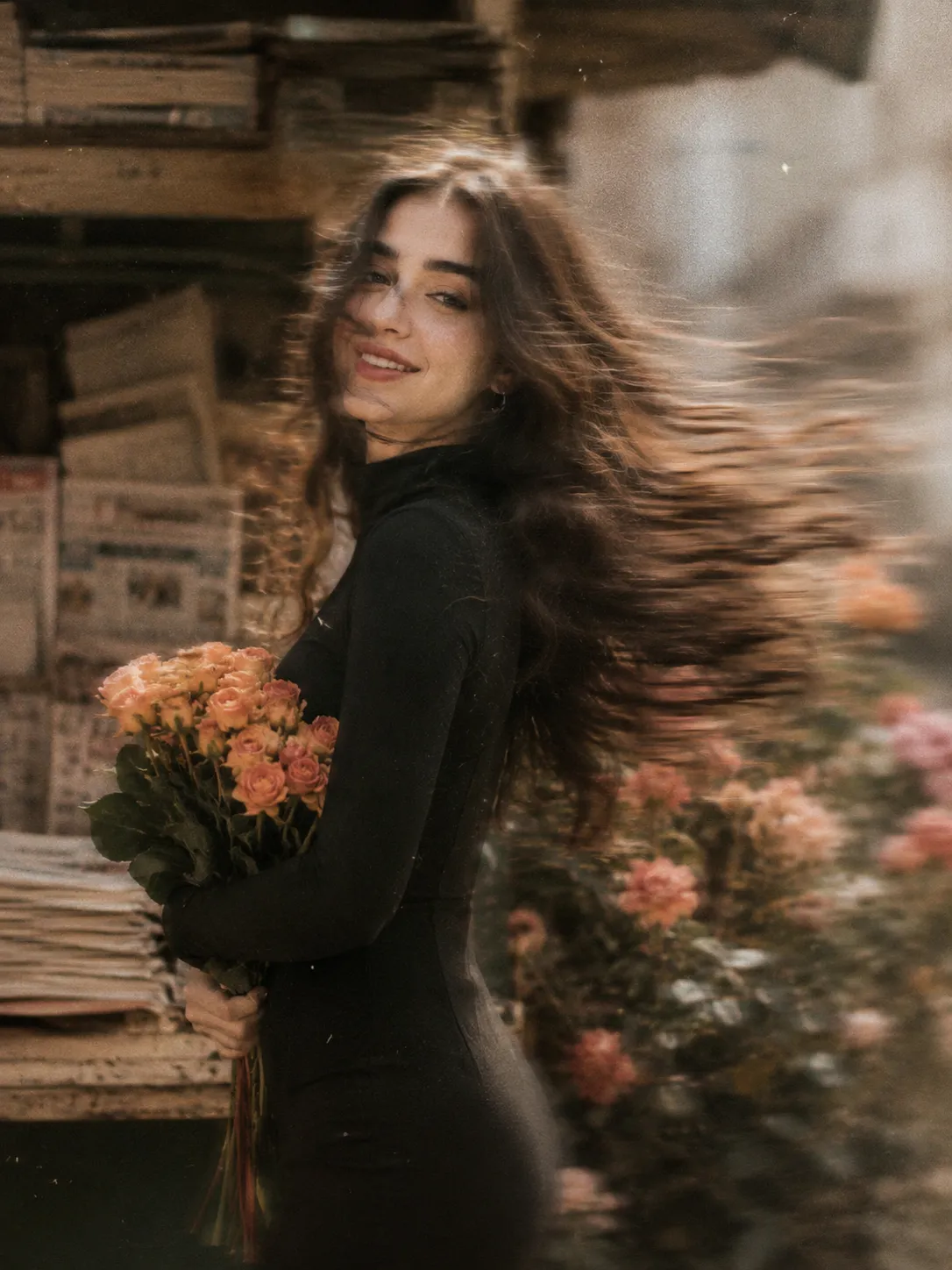
Vintage cinematic portraits have become one of the most beautiful and emotional styles in modern AI photography and digital editing. Among these aesthetics, the “Vintage Street Portrait With Flowers” style stands out because of its dreamy atmosphere, retro film texture, romantic storytelling, and soft cinematic motion blur. This visual style combines vintage street environments, warm muted colors, floral elements, and artistic motion to create portraits that feel nostalgic, mysterious, and emotionally rich.
The aesthetic is inspired by retro film photography, fashion editorials, dreamy romance movies, and artistic street portraits. Old newspaper stands, faded streets, soft flowers, flowing hair, and cinematic blur all work together to create a portrait filled with story and emotion. Unlike sharp studio photography, this style intentionally embraces softness, grain, motion blur, and imperfect realism to create a more artistic and cinematic feeling.
One of the strongest elements of this aesthetic is the emotional atmosphere. The portrait feels like a frozen memory from an old film scene. Warm low-saturation colors, blurry movement, glowing backlight, and natural expressions create a visual story that feels both romantic and mysterious. The flowers add softness and beauty while the vintage environment introduces texture and depth.
This style has become extremely popular on Instagram, Pinterest, and AI art communities because it combines realism with cinematic emotion. Motion blur and film grain create a fashionable “editorial mood” that feels modern while still carrying vintage inspiration. The final image often feels dreamy, slightly dangerous, emotional, and deeply aesthetic at the same time.
Today, AI image generation tools and cinematic editing apps allow anyone to create ultra-realistic vintage portraits without expensive cameras or professional film equipment. Whether you are a beginner or an experienced creator, you can produce stunning cinematic flower portraits using detailed prompts and artistic editing techniques.
In this article, you will learn how to use photo editing effectively, discover the best tools for AI prompt creation, understand vintage cinematic aesthetics, and learn step-by-step methods to create dreamy street portraits with flowers.
How To Use Photo Editing?
Photo editing is the process of improving and transforming an image by adjusting lighting, colors, textures, blur, atmosphere, and cinematic mood. Vintage cinematic editing focuses more on storytelling and emotional atmosphere rather than excessive sharpness or unrealistic HDR effects.
To create a Vintage Street Portrait With Flowers image, focus on the following important elements:
1. Warm Vintage Color Palette
Muted warm tones create nostalgic cinematic emotion. Low-saturation colors help the image feel soft and timeless.
2. Motion Blur and Soft Focus
Slight motion blur and dreamy softness create a realistic film-like atmosphere filled with movement and emotion.
3. Floral Composition
Flowers add elegance, romance, and softness to the portrait while balancing darker vintage tones.
4. Film Grain Texture
Vintage film grain creates realism and cinematic depth that digital sharpness alone cannot achieve.
5. Realistic Lighting
Soft backlighting and warm sunlight create glowing hair highlights and gentle skin illumination.
6. Emotional Atmosphere
The portrait should feel cinematic and story-driven instead of looking like a simple pose.
Tools You Can Use For Prompt Copy And Create Photo
Modern AI tools and editing apps allow users to create cinematic vintage portraits using detailed prompts. These tools are beginner-friendly and powerful enough for professional-quality editing.
1. ChatGPT
ChatGPT is one of the best tools for generating detailed cinematic AI prompts. You can describe lighting, flowers, vintage atmosphere, motion blur, fashion styling, and emotional mood to create highly realistic prompts.
Example Prompt Elements:
Vintage cinematic portrait
Retro street photography
Motion blur aesthetic
Warm muted colors
Film grain texture
Dreamy floral atmosphere
Detailed prompts help AI understand the exact artistic style you want.
2. Gemini AI
Gemini AI is popular for realistic cinematic image generation. It understands emotional prompts and creates artistic portraits with impressive detail.
Best Uses:
Vintage portraits
Cinematic motion blur
Romantic storytelling
Editorial street aesthetics
3. Midjourney
Midjourney is famous for artistic cinematic visuals and dreamy fashion compositions.
Features:
Beautiful vintage atmosphere
Film-inspired lighting
Emotional storytelling
Cinematic textures
4. Adobe Lightroom
Lightroom is excellent for cinematic color grading and vintage-style editing.
Useful Features:
Warm color grading
Grain adjustment
Shadow balancing
Matte effects
Soft cinematic glow
5. Snapseed
Snapseed is a powerful free mobile editing app with advanced cinematic editing tools.
Useful Features:
Selective blur
Grain texture
Warmth adjustment
Contrast balancing
Portrait enhancement
6. Adobe Photoshop
Photoshop is ideal for advanced cinematic vintage editing.
You can use it to:
Add motion blur
Enhance flowers
Create dreamy overlays
Improve film texture
Refine lighting depth
How To Edit Photo?
Creating a Vintage Street Portrait With Flowers image requires careful balance between realism and dreamy cinematic atmosphere. Follow these steps carefully for professional results.
Step 1: Choose a High-Quality Portrait
Start with a clear portrait image that has:
Sharp facial structure
Natural expression
Balanced lighting
Visible hair details
High-quality source images always produce better cinematic edits.
Step 2: Use a Detailed AI Prompt
A strong prompt is the secret behind realistic AI-generated cinematic portraits.
Example Prompt:
“Create a dreamy vintage cinematic street portrait of a beautiful young woman standing beside an old newspaper stand surrounded by soft peach flowers. She wears a fitted black outfit while holding flowers close to her body. Warm muted sunlight creates glowing highlights on her flowing hair. Strong motion blur and cinematic softness create a dreamy retro atmosphere. Vintage film grain texture visible throughout the image. Background softly blurred with artistic movement and emotional storytelling composition. Realistic skin texture, cinematic DSLR photography, shallow depth of field, nostalgic mood, warm low-saturation tones, romantic editorial aesthetic, ultra-detailed realism.”
A detailed prompt helps AI understand:
Vintage atmosphere
Floral environment
Motion blur style
Cinematic lighting
Camera composition
Emotional mood
Step 3: Adjust Lighting
In Lightroom or Snapseed:
Reduce harsh highlights
Add soft warm glow
Maintain gentle shadows
Keep realistic exposure
Lighting should feel soft and cinematic.
Step 4: Apply Vintage Color Grading
Use:
Warm brown shadows
Peach and cream highlights
Slight desaturation
Matte black tones
Balanced grading creates nostalgic film aesthetics.
Step 5: Add Motion Blur and Grain
In Photoshop:
Add slight directional blur
Create soft focus atmosphere
Add subtle film grain
Maintain facial clarity carefully
This creates realistic cinematic movement.
Step 6: Enhance Realism Naturally
Do not over-edit the image.
Instead:
Maintain realistic skin texture
Keep natural hair flyaways
Preserve soft lighting
Maintain realistic flower details
This creates an elegant editorial appearance.
Step 7: Final Adjustments
Before exporting:
Balance contrast carefully
Avoid excessive saturation
Maintain cinematic softness
Preserve realistic shadows
Export the image in high resolution for the best visual quality.
Conclusion
Vintage Street Portrait With Flowers photography beautifully combines cinematic storytelling, floral aesthetics, nostalgic film textures, and emotional realism into one elegant visual style. With the help of AI prompts, editing apps, and cinematic techniques, anyone can create premium-quality vintage portraits that feel artistic, emotional, and professional.
The secret behind cinematic vintage editing is balanced lighting, realistic textures, emotional atmosphere, and subtle motion blur instead of excessive sharpness or unrealistic effects. Whether you use ChatGPT for prompt writing, Gemini AI for image generation, Lightroom for cinematic color grading, or Photoshop for advanced film effects, the key is maintaining realism and visual harmony.
As AI photography continues to evolve, vintage cinematic portraits are becoming more creative and accessible every day. By learning proper prompt writing and editing techniques, you can transform ordinary portraits into stunning cinematic masterpieces filled with romance, mystery, and timeless beauty.