Introduction
Artificial Intelligence has completely transformed the world of digital photography and creative design. Today, artists, photographers, and content creators can generate breathtaking fashion editorials without stepping inside a professional studio. One of the newest and most eye-catching trends is the Futuristic Fashion In A Holographic World Portrait style. This artistic concept blends futuristic fashion, cyberpunk aesthetics, holographic technology, transparent crystal structures, and cinematic lighting into a single ultra-realistic masterpiece.
"Futuristic Fashion In A Holographic World Portrait Prompt"
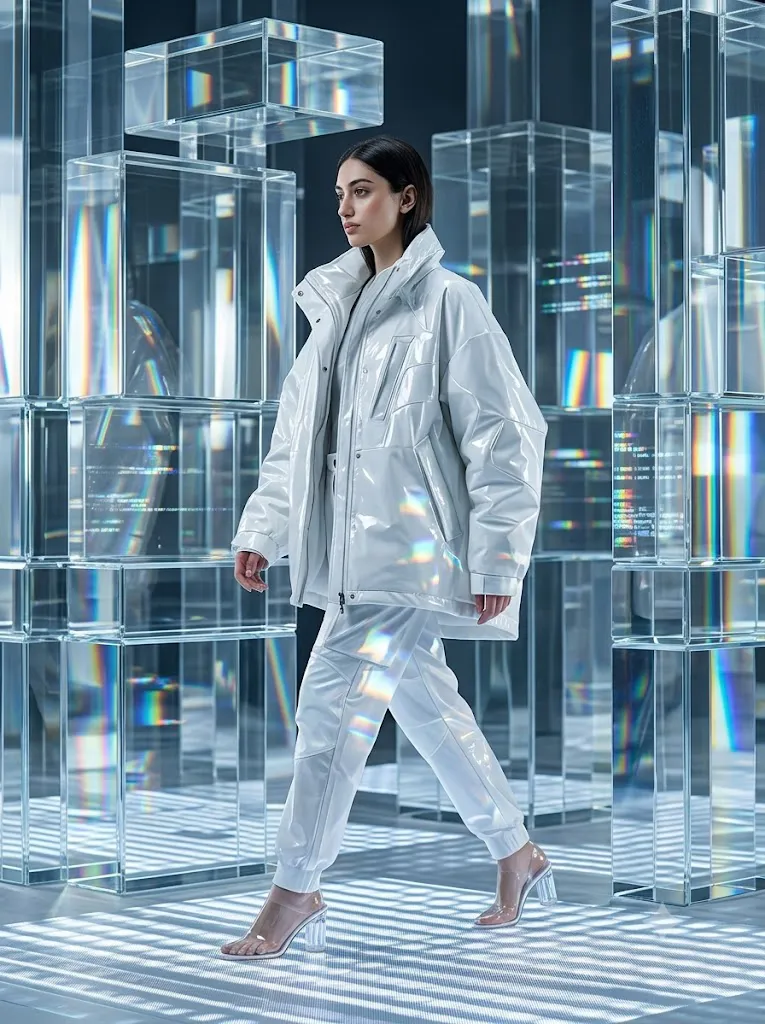
full-body portrait of a futuristic female model in glossy white oversized techwear jacket and transparent heels, walking in profile, surrounded by dense 3D holographic glitch effect made of thick transparent glass blocks and refractive crystal slabs, large rectangular.
Unlike traditional portraits, this style creates the illusion that the model exists inside a digital universe built from refractive glass, holographic glitch effects, floating crystal slabs, and futuristic architecture. The combination of oversized techwear clothing, reflective materials, transparent accessories, and cinematic composition creates an image that looks like a luxury fashion campaign from the future.
The beauty of AI image generation is that you only need a well-written prompt to bring this futuristic vision to life. Modern AI models understand detailed instructions about clothing, lighting, pose, camera angles, background design, and even material properties like glass, chrome, and holographic reflections.
Whether you are creating content for Instagram, YouTube thumbnails, Pinterest, fashion portfolios, digital artwork, NFT collections, or commercial advertisements, this portrait style offers an unforgettable visual experience. In this article, you'll learn how to use AI prompts effectively, discover the best tools for generating cinematic portraits, and explore editing techniques that give your images a premium editorial finish.
How To Use Photo Editing?
Generating an AI image is only the first step. Professional-looking fashion portraits are created through careful editing that enhances lighting, colors, textures, and overall realism. Even if your AI-generated portrait looks impressive, post-processing can make it appear like it was photographed by a luxury fashion magazine.
Begin by importing your generated portrait into a professional editing application. First, correct the exposure to ensure that both the subject and holographic environment are properly balanced. Increase highlights carefully so that the transparent crystal blocks sparkle without losing detail.
Next, improve the contrast to create stronger separation between the futuristic clothing and the holographic background. A slight increase in contrast gives the portrait more depth while maintaining realistic lighting.
Color grading is one of the most important steps. Futuristic portraits usually feature cool tones such as cyan, emerald green, electric blue, silver, violet, and white. Blend these colors carefully while keeping natural skin tones realistic. Avoid oversaturation, as premium editorial photography often relies on clean and elegant color palettes.
The holographic elements should appear bright but not overwhelming. Increase clarity only on the glass structures while keeping the background slightly softer. This creates depth and directs attention toward the model.
Retouch the skin carefully by removing temporary imperfections while preserving natural pores and facial texture. Over-smoothing can reduce realism, so subtle corrections work best.
Finally, sharpen important details such as the eyes, lips, hair strands, clothing folds, transparent heels, and reflective jacket surfaces. These finishing touches help create an image worthy of a high-end commercial campaign.
Tools You Can Use For Prompt Copy and Create Photo
Creating futuristic fashion portraits has become much easier thanks to modern AI image-generation platforms and professional editing software. Below are some of the most recommended tools.
1. ChatGPT
ChatGPT is one of the best prompt-writing assistants available today. It helps transform simple ideas into highly detailed prompts that AI image generators can accurately understand.
2. Midjourney
Midjourney is famous for producing artistic, cinematic, and highly detailed fashion images.
3. Flux AI
Flux AI produces incredibly realistic portraits with excellent facial consistency and lighting quality.
4. Leonardo AI
Leonardo AI offers advanced customization for lighting, composition, realism, and prompt control.
5. Adobe Firefly
Adobe Firefly integrates AI image generation with Adobe Creative Cloud, making it an excellent option for professional designers.
6. Adobe Photoshop
Photoshop remains the industry standard for advanced photo manipulation.
7. Adobe Lightroom
Lightroom is perfect for giving your portrait a cinematic editorial appearance.
How To Edit Photo?
Follow these steps to transform your AI-generated portrait into a luxury futuristic editorial masterpiece.
Step 1: Generate a High-Resolution Image
Start with the highest-quality AI-generated image possible. Higher resolution preserves more details during editing.
Step 2: Correct Exposure
Balance brightness while protecting highlights inside the transparent glass structures.
Step 3: Improve Contrast
Increase contrast moderately to create stronger separation between the subject and holographic environment.
Step 4: Enhance Futuristic Colors
Adjust:
- Cyan
- Blue
- Emerald Green
- White
- Silver
- Violet
Maintain realistic skin tones while enhancing the futuristic atmosphere.
Step 5: Refine Skin
Use healing tools to remove temporary imperfections while preserving realistic texture.
Step 6: Sharpen Facial Features
Increase sharpness around:
- Eyes
- Eyelashes
- Lips
- Hair
- Eyebrows
These details naturally attract the viewer's attention.
Step 7: Enhance Clothing Details
Boost clarity around:
- Glossy techwear jacket
- Fabric folds
- Transparent heels
- Reflective materials
- Metallic accessories
This creates a premium fashion editorial appearance.
Step 8: Improve Glass Reflections
Increase highlights and local contrast around the holographic glass blocks to emphasize their transparent and refractive qualities. Keep the effect subtle to maintain realism.
Step 9: Apply Cinematic Color Grading
Use split toning or color grading to create a futuristic atmosphere. Cool shadows combined with neutral highlights often produce a clean sci-fi aesthetic.
Step 10: Export Your Final Portrait
Export using maximum quality settings.
Recommended Export Settings:
- PNG or High-Quality JPEG
- 300 DPI
- 4K or 8K Resolution
- Adobe RGB or sRGB Color Space
- Maximum Quality Compression
These settings ensure your portrait is suitable for websites, social media, print, portfolios, and commercial projects.
Conclusion
The Futuristic Fashion In A Holographic World Portrait style represents the perfect fusion of AI creativity, luxury fashion photography, and science-fiction-inspired design. By combining detailed prompts with advanced image-generation tools and professional editing techniques, anyone can create stunning editorial-quality portraits that look as though they belong in a futuristic magazine or blockbuster film.
The secret to achieving this aesthetic lies in thoughtful prompt writing, cinematic lighting, premium wardrobe styling, holographic environments, and subtle post-processing. Every element—from glossy oversized techwear and transparent heels to floating crystal slabs and refractive glass effects—works together to create a visually striking composition.
As AI technology continues to evolve, creators now have unlimited opportunities to explore imaginative concepts that were once impossible to photograph in real life. With practice, creativity, and the right tools, you can produce breathtaking futuristic portraits that capture attention, inspire audiences, and elevate your digital portfolio to a professional level.