Introduction
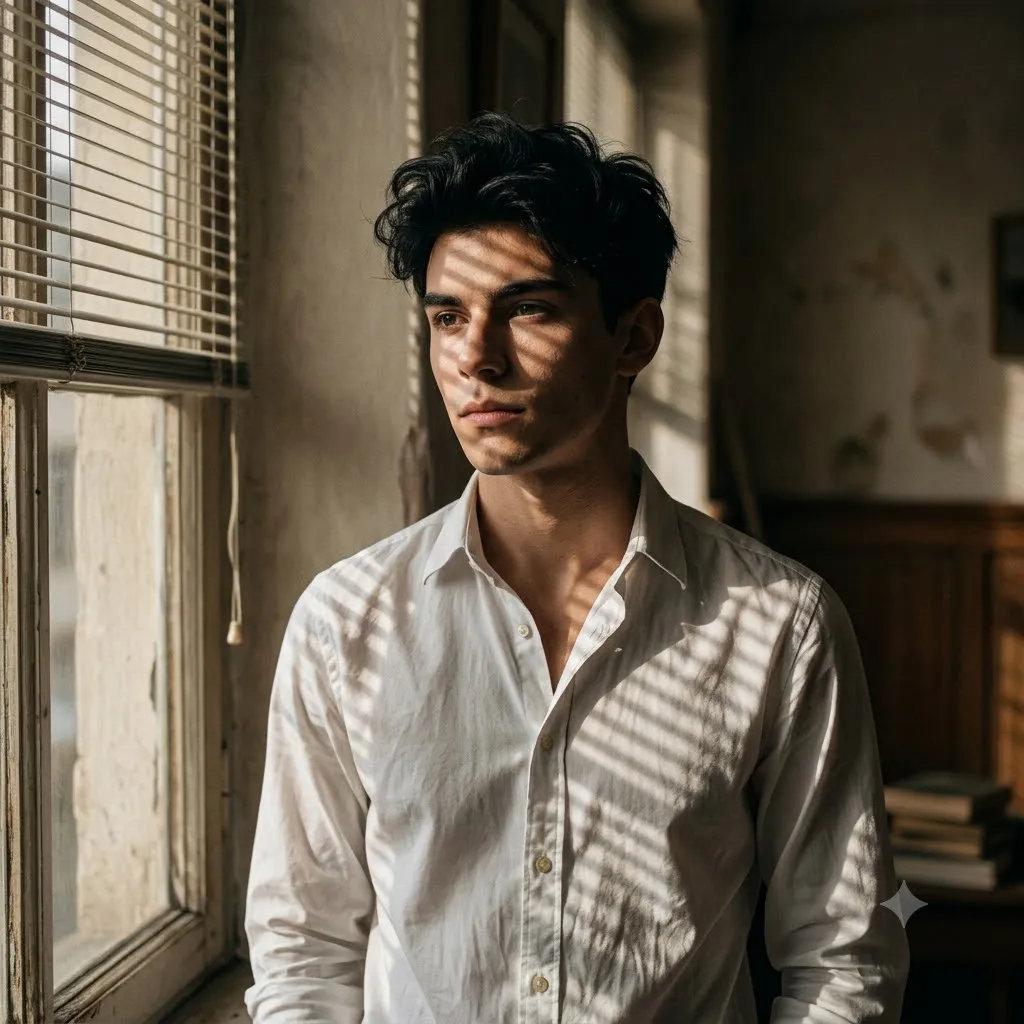
The Moody Window Shadow Editorial Portrait Prompt is a sophisticated portrait concept inspired by cinematic storytelling, luxury fashion editorials, and fine-art photography. Instead of relying on elaborate locations or dramatic visual effects, this style uses one of the simplest yet most powerful tools in photography—natural window light. When sunlight passes through window blinds, it creates elegant striped shadows that transform an ordinary portrait into an expressive editorial image filled with depth and emotion.
"Moody Window Shadow Editorial Portrait Prompt"
Create a photorealistic cinematic portrait using the uploaded image strictly as the facial identity reference. Preserve the exact facial structure, skin tone, hairstyle, eyes, eyebrows, nose, lips, jawline, and proportions without beautification. Dress the subject in a white shirt with the top buttons casually open. Style the hair as naturally messy black hair with soft texture. Position the subject beside a large window where sunlight passes through horizontal blinds, creating elegant striped shadows across the face and clothing. Capture using a professional DSLR or mirrorless camera with an 85mm portrait lens at f/1.8, shallow depth of field, realistic skin texture, cinematic color grading, soft natural lighting, subtle analog film grain, and ultra-detailed 8K quality. No text or watermark.
This portrait style is popular in fashion magazines because it emphasizes mood rather than action. The combination of soft daylight, carefully controlled shadows, and a calm expression allows the subject's personality to become the center of attention. The atmosphere feels intimate, reflective, and timeless, making it ideal for lifestyle branding, fashion campaigns, portfolio work, and creative editorial photography.
One of the most important principles of this prompt is complete facial identity preservation. If an uploaded reference image is used, the AI should maintain the exact facial structure, skin tone, hairstyle, eyes, eyebrows, nose, lips, jawline, and every recognizable characteristic without modification. The portrait should enhance lighting, styling, and composition while leaving the person's identity completely unchanged.
Wardrobe styling is intentionally minimal. A clean white shirt with a few buttons casually open introduces elegance without distracting from the lighting. The white fabric also reflects natural daylight beautifully, helping create subtle highlights that complement the shadow patterns across the face.
Hair styling should appear effortless. Slightly messy black hair softens the overall composition and adds realism. Loose strands naturally catch the light, creating visual texture and reinforcing the cinematic mood.
Lighting is the defining feature of the entire portrait. Soft daylight entering through a nearby window creates directional illumination while the blinds cast distinct parallel shadows across the face and clothing. These shadow lines introduce rhythm, contrast, and emotion while preserving a natural appearance.
Captured with a professional DSLR or mirrorless camera using a fast portrait lens, the finished image combines realistic skin texture, shallow depth of field, cinematic color grading, and subtle film grain to produce a timeless editorial portrait suitable for premium publications.
How To Use Photo Editing?
Professional editing should enhance the atmosphere without removing the authenticity created by natural light.
Begin by balancing exposure carefully. Preserve details in the bright window light while maintaining information inside the shadow areas.
Adjust white balance toward neutral daylight. Avoid excessive warmth or coolness so the skin retains a realistic appearance.
Maintain natural skin texture. Editorial beauty portraits should preserve pores and subtle facial details instead of creating plastic-looking skin.
Refine contrast gently around the shadow stripes to ensure they remain clean and well defined without appearing artificial.
Enhance hair texture by increasing local clarity around individual strands that catch the sunlight.
Improve fabric detail in the white shirt while preventing highlight clipping.
Finish with subtle cinematic color grading and fine analog-style grain for an elegant magazine-quality appearance.
Tools You Can Use For Prompt Copy and Create Photo
Modern AI tools and editing software make creating cinematic editorial portraits more accessible than ever.
AI Image Generation Tools
ChatGPT
Excellent for writing detailed prompts that describe facial preservation, wardrobe, lighting, composition, and camera settings.
Midjourney
Creates artistic editorial portraits with cinematic mood and elegant lighting.
Leonardo AI
Produces highly realistic portraits with natural facial consistency and excellent skin rendering.
Ideogram
Suitable for editorial fashion concepts and realistic portrait generation.
Adobe Firefly
Provides AI-powered image creation integrated into Adobe Creative Cloud.
Photo Editing Software
Adobe Photoshop
Ideal for advanced portrait retouching, shadow refinement, and lighting enhancement.
Adobe Lightroom
Perfect for exposure correction, cinematic color grading, and finishing adjustments.
Capture One
Offers professional-level skin-tone rendering and exceptional color management.
Affinity Photo
Provides powerful portrait editing tools with detailed retouching capabilities.
Snapseed
Useful for mobile editing with simple adjustments for brightness, warmth, sharpness, and contrast.
How To Edit Photo?
Step 1: Generate the Base Portrait
Create the complete portrait while preserving facial identity exactly.
Step 2: Balance Exposure
Maintain detail in both the bright window light and the shadow areas.
Step 3: Preserve Natural Skin
Retain realistic facial texture while gently minimizing distractions.
Step 4: Refine Shadow Patterns
Enhance the window-blind shadows so they appear clean, soft, and naturally aligned.
Step 5: Improve Hair Detail
Increase definition around highlighted strands while maintaining softness.
Step 6: Enhance Clothing Texture
Refine the fabric details of the white shirt without over-sharpening.
Step 7: Apply Cinematic Color Grading
Balance warm highlights with subtle cool shadows to create a premium editorial mood.
Step 8: Add Fine Film Grain
Introduce light analog grain that complements the cinematic atmosphere.
Step 9: Sharpen Key Features
Increase clarity around the eyes, lips, and facial contours while keeping the background softly blurred.
Step 10: Verify Facial Consistency
Confirm that every facial feature precisely matches the uploaded reference photograph.
Step 11: Final Refinements
Remove visual artifacts while preserving realistic lighting transitions and natural textures.
Step 12: Export in High Resolution
Save the completed portrait as PNG or TIFF to maintain maximum image quality for portfolios, magazines, websites, social media, or print.
Conclusion
The Moody Window Shadow Editorial Portrait Prompt demonstrates how simple natural lighting can create extraordinary visual storytelling. Instead of relying on elaborate sets or expensive equipment, it uses sunlight, window blinds, and thoughtful composition to produce portraits that feel emotional, elegant, and cinematic.
The combination of complete facial identity preservation, relaxed wardrobe styling, directional daylight, striped shadow patterns, realistic skin texture, and subtle editorial color grading creates portraits suitable for fashion magazines, personal branding, creative portfolios, and luxury lifestyle campaigns.
Although AI image generation makes portrait creation faster than ever, truly professional results still depend on carefully crafted prompts and thoughtful post-processing. Maintaining realistic skin, preserving facial identity, refining natural shadows, balancing exposure, and enhancing subtle textures are essential steps toward creating portraits that feel authentic rather than artificial.
Whether you're producing editorial photography, fashion campaigns, creative portfolios, or sophisticated social media content, the Moody Window Shadow Editorial Portrait Prompt provides an outstanding foundation for creating timeless, photorealistic portraits filled with mood, elegance, and cinematic realism.