Introduction
The charm of vintage photography continues to inspire artists, photographers, and AI creators around the world. Among the most beloved aesthetics is the nostalgic atmosphere of late-1980s Japanese photography, often associated with the final years of the Showa era. These images evoke memories of warm summers, quiet afternoons, film-camera imperfections, and candid moments frozen in time. The Showa-Era Poolside Nostalgia Portrait Prompt recreates this feeling through a carefully crafted combination of fashion, lighting, color grading, film characteristics, and emotional storytelling.
"Showa-Era Poolside Nostalgia Portrait Prompt"
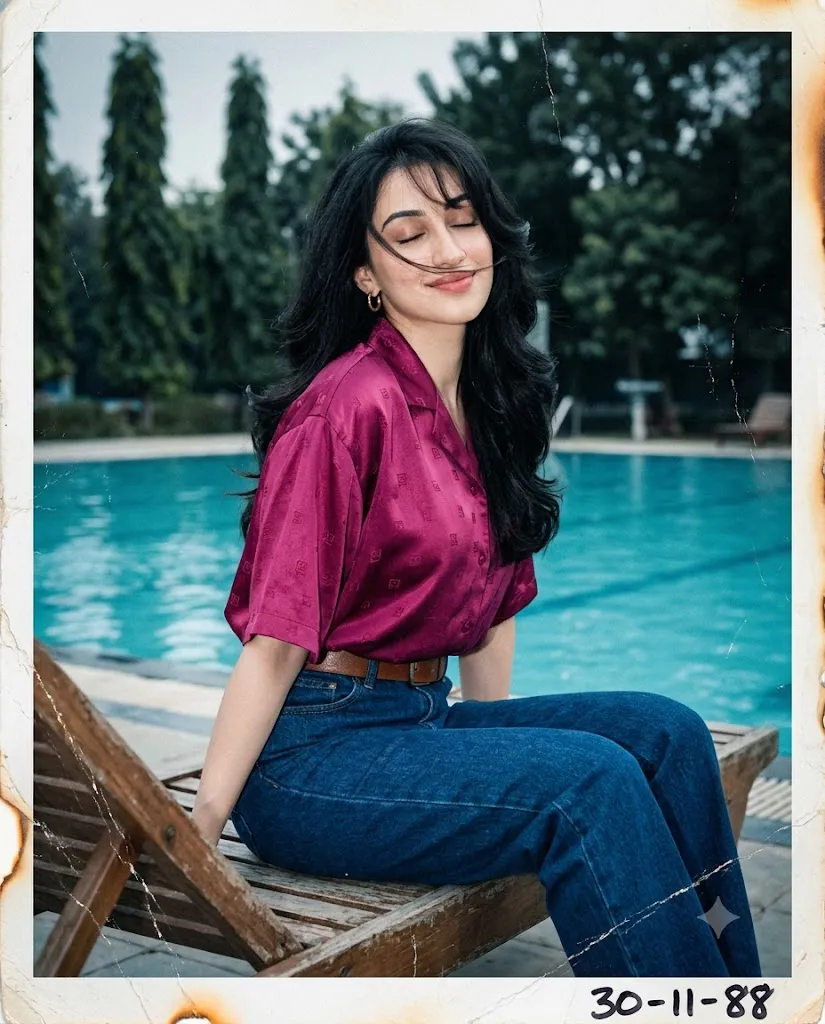
Create a photorealistic late-1980s Japanese poolside portrait of a young woman sitting on a wooden lounge chair beside a swimming pool. She wears an oversized deep magenta satin blouse with subtle embossed patterns tucked into high-waisted dark blue straight-leg jeans with a brown leather belt. Long black hair styled in a soft layered retro 1980s blowout with wispy bangs and a strand of hair crossing her face. The scene is captured candidly from the side using an Olympus OM-1 film camera with a 50mm lens and internal flash. Blue-cyan pool water, desaturated cypress trees, cool-toned atmosphere, soft sunlight, visible film grain, subtle overexposure, heavy vignette, slight halation, authentic Kodak Gold color rendering, aged film scratches, faded borders, orange burn edges, handwritten text '30-11-88'. Ultra-realistic, nostalgic Showa-era aesthetic.
This portrait concept centers around a young woman relaxing beside a swimming pool in an open outdoor setting. The scene feels authentic and natural rather than staged. She wears a deep magenta satin blouse tucked into high-waisted dark blue jeans, reflecting casual Japanese fashion trends of the late 1980s. Her hairstyle captures the era’s signature look with soft volume, layered framing, and naturally curved ends. A gentle breeze moves a strand of hair across her face, adding realism and spontaneity.
The location plays an equally important role. Blue-cyan swimming pool water contrasts beautifully with muted greenery and desaturated cypress trees in the background. The setting creates a balance between warmth and melancholy, a visual style commonly seen in nostalgic Japanese photography.
The image is imagined as being captured with an Olympus OM-1 film camera using a standard 50mm lens. This introduces authentic analog characteristics such as visible film grain, subtle vignetting, soft sharpness, flash highlights, slight overexposure, and natural color shifts. Combined with aging effects such as scratches, faded borders, and handwritten dates, the portrait feels like a treasured memory discovered inside an old family photo album.
Modern AI image-generation tools make it possible to recreate this aesthetic with remarkable realism. However, understanding how to write detailed prompts and refine the final image through editing is essential for achieving convincing results. This guide explains the complete process of creating a Showa-Era Poolside Nostalgia Portrait.
How To Use Photo Editing?
Photo editing is a vital step when creating vintage-inspired portraits. Even if the generated image already looks realistic, thoughtful editing can dramatically enhance authenticity and emotional impact.
The first priority is color correction. Vintage Japanese film photography often features cool blue-cyan shadows, soft highlights, and gentle saturation. Modern digital images may appear too clean or vibrant, so reducing saturation slightly helps recreate the film aesthetic.
Exposure adjustment is equally important. Film cameras often produced mild overexposure in bright areas, particularly on reflective surfaces such as clothing and water. Carefully lifting highlights can replicate this effect while preserving detail.
Film grain should be visible but not excessive. Fine low-ISO grain helps create a realistic analog appearance without distracting from the subject.
The swimming pool water deserves special attention. Enhancing subtle cyan and blue tones strengthens the nostalgic mood while maintaining realism.
Skin retouching should remain minimal. Authentic film photography preserves natural skin texture rather than smoothing every detail. Avoid over-processing and keep the face true to the original reference.
Adding subtle halation can further improve realism. Bright highlights, especially reflections on water and clothing, can glow slightly to mimic vintage film behavior.
Vignetting around the edges helps direct attention toward the subject while reinforcing the look of old camera lenses. Slight corner darkening creates depth and authenticity.
Finally, aging effects such as scratches, faded borders, film burns, and handwritten dates can transform a modern image into a believable vintage photograph.
Tools You Can Use For Prompt Copy and Create Photo
The right tools can significantly improve both image generation and editing quality.
AI Image Generation Tools
ChatGPT
ChatGPT helps create detailed prompts that accurately describe vintage styling, lighting, composition, and film characteristics.
Midjourney
Midjourney excels at cinematic storytelling and nostalgic visual aesthetics.
Leonardo AI
Leonardo AI generates highly realistic portraits with excellent control over textures and environmental details.
Ideogram
Ideogram is useful for producing lifestyle portraits and creative editorial compositions.
Adobe Firefly
Adobe Firefly offers professional-quality image generation with strong integration into creative workflows.
Photo Editing Software
Adobe Photoshop
Photoshop provides advanced tools for film simulation, aging effects, retouching, and compositing.
Adobe Lightroom
Lightroom is excellent for color grading, exposure balancing, and creating vintage film looks.
Capture One
Capture One delivers precise color control and professional image processing capabilities.
Snapseed
Snapseed offers mobile-friendly editing tools with strong vintage filter options.
PicsArt
PicsArt combines creative effects and traditional editing features suitable for social-media creators.
How To Edit Photo?
Step 1: Import the Image
Open the generated image in Photoshop, Lightroom, or another professional editing application.
Step 2: Balance Exposure
Adjust highlights and shadows to create a soft vintage appearance.
Step 3: Cool the Color Palette
Introduce subtle blue-cyan tones while reducing excessive warmth.
Step 4: Reduce Saturation Slightly
Vintage film colors should appear softer and more restrained than modern digital photography.
Step 5: Add Film Grain
Apply fine low-ISO grain across the entire image for authenticity.
Step 6: Create Halation Effects
Add subtle glow around bright highlights and reflective surfaces.
Step 7: Enhance Pool Water
Strengthen cyan tones while maintaining realistic reflections.
Step 8: Apply Vignetting
Darken the corners gently to mimic vintage lens behavior.
Step 9: Preserve Natural Skin Texture
Retouch minimally and avoid artificial smoothing.
Step 10: Add Aging Effects
Include scratches, faded borders, peeling marks, and film wear.
Step 11: Insert Handwritten Date
Add realistic handwritten text such as “30-11-88” using a natural marker style.
Step 12: Export High Resolution
Save the final image in TIFF, PNG, or high-quality JPEG format.
Conclusion
The Showa-Era Poolside Nostalgia Portrait Prompt captures more than just a visual style—it recreates a feeling. Through carefully chosen wardrobe, authentic film-camera characteristics, nostalgic color grading, and subtle imperfections, the image transports viewers to a quiet summer afternoon in late-1980s Japan.
What makes this aesthetic so compelling is its emotional depth. The cool blue-cyan tones, soft sunlight, candid composition, and aged film textures combine to create an image that feels both personal and timeless. Rather than appearing perfectly polished, the portrait embraces imperfections that make it feel genuine and memorable.
Modern AI technology allows creators to reproduce this iconic look with remarkable realism. However, success depends on thoughtful prompt writing, strong understanding of vintage photography, and careful post-processing. Each element—from hairstyle and wardrobe to grain structure and color balance—contributes to the final illusion of authenticity.
Whether you are a photographer, digital artist, content creator, fashion enthusiast, or AI image designer, the Showa-Era Poolside Nostalgia Portrait offers a unique opportunity to blend storytelling, emotion, and visual artistry. By mastering this aesthetic, you can create images that feel like cherished memories preserved on film, carrying the warmth and melancholy of a bygone era into the present day.